Tuesday, July 03, 2007

Recalling Patriotic Hymns


Tomorrow, in the United States, we will celebrate our country’s independence. I absolutely love celebrations and am particularly fond of the Fourth of July. Fireworks and relaxing time spent with good friends are highlights of this day for me. I usually conjure up visual images such as banners and stoles for special days within the year, but for the Fourth of July I hear the music of patriotic hymns dancing in my mind.


A favorite, “O Beautiful for Spacious Skies” by Katharine Lee Bates was written when her soul was stirred by the expansive earth below and the spacious skies above while hiking Pikes Peak in Colorado. She wrote, “It was there as I was looking out over the amber skies, that the opening lines of this text formed themselves in my mind.” Reportedly she immediately set to writing the hymn while in Colorado Springs.


I adore hiking the mountains and have had the pleasure of traveling to the top of Pikes Peak so I can relate to Ms. Bates reaction to her experience. There are many other places in this grand world that can provide those “mountain top moments”. I’m proud to be an American but after reading the history of this hymn I also think the wonderfully descriptive words it contains can be supplied for many places on this wonderful planet. Thanks be to the Creator.

Tuesday, June 26, 2007

Living in God's Time


Jesus teaches us through parables about the kingdom of God. For example, he uses the story of the mustard seed which grows into a large shrub. Likewise during Ordinary Time many churches use the color green for their stoles, vestments, and banners as an instructional reminder. Green is the color of growth and we can easily be stirred by nature to examine the multitude of variety there is within the hue and then carry this into the color within our sanctuaries. We are constantly inspired by Jesus's clever ways of teaching and using color and symbols is yet another way we can reach especially those that learn visually.

Additionally, as we grow to understand the kingdom of God I think of the questioning strategies that the Children and Worship (http://www.childrenandworship.org/ ) program uses. They teach the children to “wonder” to facilitate growth. For example:

  • I wonder what the kingdom of God looks like in today’s scripture?
  • I wonder why Jesus told this story?
  • I wonder how I would have to change to live as Jesus tells us?
  • I wonder what I can do this week to participate in the kingdom of God?

In the midst of this Oridnary Time enjoy the numerous greens, take time to wonder, and be encouraged to grow and lead others to do the same.

*The pictured Mustard Seed stole will be available on eBay (http://search.ebay.com/_W0QQsassZcarrottopstudioQQhtZ-1QQfrppZ50QQfsopZ1QQfsooZ1QQrdZ0?) beginning 6/28.

If you like these thoughts you may enjoy Living in God’s Time, by Margaret McMillan Persky.

Wednesday, June 06, 2007

Children and Worship

The gospel is for all persons, regardless of age. The church includes persons of all ages. Worship is a corporate action in which children can be participants with adults. It is through such shared experiences that a child comes to know some things about God. Here are a few of our favorite tips regarding children and worship:


For parents:
It is hard to sit still for long. God knows this and so do we.
Growing up isn’t always easy, but it is well worth the effort.

For the congregation:
Greet the children around you.
Pass the children the offering plate, rather than over their head.
When children give visible worship leadership, respond to them as worship leaders—not as performers!
Always laugh with children, not at them.
Invite a family with children to sit with you.
Be understanding when parents need to take younger children out and then return to worship.
Remember the promise we make at the baptism of the children among us!

For the leadership:
In Children in the Worshiping Community by David Ng and Virginia Thomas it is suggested to read aloud Romans, chapter 12 with a group of children. Are these children not members of the body of Christ, with differing gifts? Can they not show faith and serve and teach and show mercy? Children can love, show honor, be aglow with the Spirit, rejoice in hope, be patient in tribulation and constant in prayer. The church would not be whole without children.

Children like adults respond to visual stimulation. Think about the vestments, paraments, banners, and bulletin covers your congregation uses. Are the symbols and colors relevant to support the worship? Do they change often enough so the congregation will continue to take notice?


Celebrate, embrace and learn from the children in your midst! Jesus welcomed them, so can we.

Wednesday, May 30, 2007

Ordinary Time Ingenuity

Ordinary Time might take a little ingenuity. I like to ponder what Acts 2:42 says; “They devoted themselves to the apostles’ teaching and fellowship and the breaking of bread and prayers”. In worship we change our stoles and banners to the traditional shades of green to symbolize growth. Our actions can also promote a visual influence and reminder of the Mystery of Christ. I stumbled across a list of ideas from the United States Catholic Bishops that includes simple tangible suggestions. They include:


Give a flower~Eat lunch with someone new~Listen with your heart~Visit a sick friend~Clean a neighbor's walk~Offer a hug~Give an unexpected gift~Make a new friend~Say "hello"~Call a lonely person~Open a door~Help carry a load~Plant a tree~Pass a kindness on~Buy someone's meal~Cheer up a friend~Thank a teacher~Give blood~Read to a child~Do one kind act every day~Leave a thank you note~Offer your seat~Tip generously~Be tolerant~Let another go first~Tutor a student~Give a compliment~Pay the next driver's toll~Lend a hand~Offer a ride~Respect others~Encourage a child~Walk a dog~Do a favor~Forgive mistakes~Drive courteously~Share a smile.

Enjoy living in the midst of Ordinary Time!

Thursday, May 10, 2007

Pentecost


Pentecost is upon us and we anticipate being filled with joy and hope when we celebrate the birthday of the Church. Take pleasure in the following Ann Weems poem for inspiration, devotion or use in a group.

The church is Pentecost.
The Holy Spirit is poured out upon us
And sends us out together
aflame
with new life,
Inheritors of the wealth of God:
Life abundant.
We are liberated from the prisons of pettiness,
jealousy, and greed,
Liberated to be the church.


From Reaching For Rainbows

Wednesday, April 18, 2007

Book Review


Do you enjoy church history? Have you been thinking about the relationship between the liturgical arts and culture? You shouldn’t miss reading: All in Sync: How Music and Art Are Revitalizing American Religion by Robert Wuthnow. After interviewing 400 people, this Princeton sociologist reports that religious communities are being revitalized by increased artistic engagement. In fact, his studies show that "those with greater exposure to artistic activities are more likely than those with less exposure to be seriously committed to spiritual growth." Wuthnow is an astute observer of religious trends and at Carrot Top Studio we are very excited about the prospect of churches finding the balance between music and art and using these elements to strengthen personal spiritual journeys.

PS-Don’t neglect the wonderful creative answer to banners by Nancy Chinn on the cover of this book!

Thursday, March 22, 2007

Rejoice!


In the midst of this season of ashes and dust, if you are in ministry, you probably need to think ahead to plan an Easter celebration. At Carrot Top Studio we also work a season ahead, therefore the phrase “Rejoice at the coming of your King!” is currently dancing in mind. This reference to Zechariah 9:9 fills me joy!

How will your congregation illustrate the joy of the Easter season? It may possibly be through the traditional colors of white and gold. Many will display lilies (see http://mysite.verizon.net/vzeoro2y/id66.html for an explanation of lilies) and spring flowers. Crosses will be draped in white and stoles and worship banners will display butterflies and the Lamb of God. Others will greet Easter morn while worshiping outside. The bona fide rising sun is an awesome visual display that could be part of any liturgical ritual.

What else can we do that is visual in worship for Easter? Involving children is keeping with Christ’s teachings. The young and young at heart would love to show their Easter joy with visual art that includes motion. Make ribbon dancers (directions follow) and let them REJOICE through movement accompanied by the uplifting music of Easter.

Ribbon Dancer

Supplies: 12” long wood dowel at least ¼” in diameter,
1 eye hook,
1 barrel swivel (found where fishing supplies are sold),
3-6’ silk ribbon, approx. 1” wide.

Attach eye hook in end of dowel. Attach barrel swivel to eye hook. Tie ribbon onto barrel swivel. Enjoy the movement of the ribbon by holding the dowel and turning your wrist.

Wednesday, March 07, 2007

Saint Patrick


Liturgical art is woven into my business creating unique stoles and worship banners. Therefore when I recently read, “the saints are to God like stained glass is to sunlight” I immediately loved the connection of a liturgical art form to faith. I think this person was seeing light changing as it passed through the colored glass. The many colors combine to form diverse hues to reveal hidden perfections of the original light beam. This calls to mind the virtues of the saints that help us to better appreciate God's comprehensive goodness.

Saint Patrick is of course one example from history that we can model our lives after. He was a missionary and the foundations of Christianity in Ireland are largely attributed to him. His life included a time in captivity, but he showed faith when he heard God’s call. The seeds that were planted when Patrick learned the Celtic language while in captivity allowed the perfections of God’s holiness to shine through him. By contemplating and honoring saint’s goodness, we come better to know and revere the overawing holiness of God.
Many of us are preparing to celebrate Saint Patrick’s Day. Some will do this with a green beer in hand or a green carnation on the lapel. But you might model your action after St. Patrick who of course focused elsewhere. He said, “May the strength of God pilot us, may the wisdom of God instruct us, may the hand of God protect us, may the word of God direct us. Be always ours this day and for evermore.”


Wednesday, February 14, 2007

Color Is the Symbol


We woke this morning to a glorious scene of sparkling snow. The whiteness blanketed everything it could. The color set a feeling in me that was much different than when I rise on a grey, rainy day or a brilliant, sun filled day. It never ceases to amaze me how color can affect a mood, trigger a feeling, or set the tone of an environment. Thinking of this is very fitting with the beginning of Lent right around the corner. I love the season of Lent because it invites us to a more intense reflection and a recoiling from everyday life. How can this feeling and mood be approached visually in worship? The liturgical color for Lent is purple, a solemn color, and a color for royalty and repentance. Consider letting color, without symbols, be the visual, solemn code and vehicle for centering on Christ. The color is the symbol.

Thursday, January 25, 2007

Sanctuary

Our studio has just completed a Noah’s ark stole design. This has caused me to ponder “the ark” and what it meant to Noah, his family and the animals. The ark was a sanctuary.

What is a sanctuary? Webster’s Dictionary defines it as a place of safety or refuge. In medieval law, a sanctuary was a place of religious right of asylum for felons on the run from the law. In churches the word sancutary defines an architectural space but varies in tradition from the elevated place where the altar stands in the chancel, and where the ordanined servant of the congregation leads the worship to a more general reference to the place where worship services are held.

Noah was faithful to God. May we also be faithful to God in our contemporary sanctuaries by speaking, singing, dancing, and creating the visual connections that are responses and celebrations of the Word.

Thursday, January 04, 2007

Don’t Put the Celebration Away

Advent allows us to anticipate Christ’s birth. Christmas Day has arrived and we are now in the midst of the Twelve Days of Christmas. Soon this part of the liturgical calendar will climax when most Christians will celebrate Epiphany on January 6th. Epiphany looks ahead to the mission of the church to the world in light of the Nativity.

The five pointed star is symbolic of the Epiphany, or the manifested nature of God. Matthew 2:1-12 records that the wise men came from the east and asked, “Where is he who has been born king of the Jews? For we have seen his star in the east, and have come to worship him.” The five pointed star is the star “out of Jacob” (Num. 24:17) and Jesus Christ, “the bright morning star” (Rev. 22:16) who manifested himself to the Gentiles. The five pointed star usually accompanies scenes of the nativity.

While celebrating Epiphany you may cut out paper stars and place them in the windows of your home. Alternatively you might gather with your congregation for scripture, song, and fellowship as your Christmas trees provide light in a bonfire. Regardless of how you celebrate, Epiphany is about letting God’s light and love shine through us and recognizing that light in others. Shine on!


*artwork: Nativity-3 by Kim Jae Im, Korea

Thursday, December 14, 2006

Banners as Artistic Expressions


Do you seek to bring a sense of life and color to your worship space to enhance and expand worshipers’ perception of the reality and grace of God? Worship banners are a form of artistic expression that can do just that. Banners have a long established tradition is churches. Well-designed banners are an effective means toward the enhancement of worship both because of their visual appeal and because they can be continually changed in color and symbolism to represent the progression of the calendar of the Church year.

Whether the banners are to be in a small or grand scale there are several components to think about so you can obtain your goal. Who will make the banners? Banners can be created by teams of people gifted with artistic and textile construction skills. Artists can be commissioned to create banners. Children can also create banners under well planned adult guidance. Secondly, decide if the banners will hang for a short or long period of time. This will help dictate the type of materials used because anything from butcher block paper to magnificent brocade fabric has potential. Thirdly, examine and measure the space the banners will hang in. Proportion to the architecture is key to helping the banners function direct attention to God. It would not be appropriate for the banners to call attention to them or be present for their beauty as an end to themselves.

May your church banners echo the psalmist who declared, “O Lord, our Lord, how majestic is they name in all the earth!” (Psalm 8:9)

*angels are a detail from new banners created by Carrot Top Studio for a parish in Michigan.

Monday, November 27, 2006

Don't Forget Advent!


  • This Sunday we will begin a new church year. Advent allows us to once again turn our attention to the preparation for the coming of the Lord. Advent is a Latin word meaning “the coming.” Officially established by church leaders in the sixth century, Advent was originally meant to be a time when Christians reflected on the meaning of Christmas. Today, fourteen hundred years after the first Advent season, many churches and families use the symbols of Advent—wreaths, candles, and calendars—to bring the spiritual meaning of Christmas alive in a way that teaches minds, touches hearts, and reflects the original purpose of the tradition. How can we see Christ more clearly, judge the world more wisely, and live in relationship with God more faithfully? Consider the following for the church and/or the home:

  • sing the hymns of Advent and save the Christmas favorites for Christmas
  • make a paper chain to countdown through Epiphany-using different colors for each season (purple, white, green)
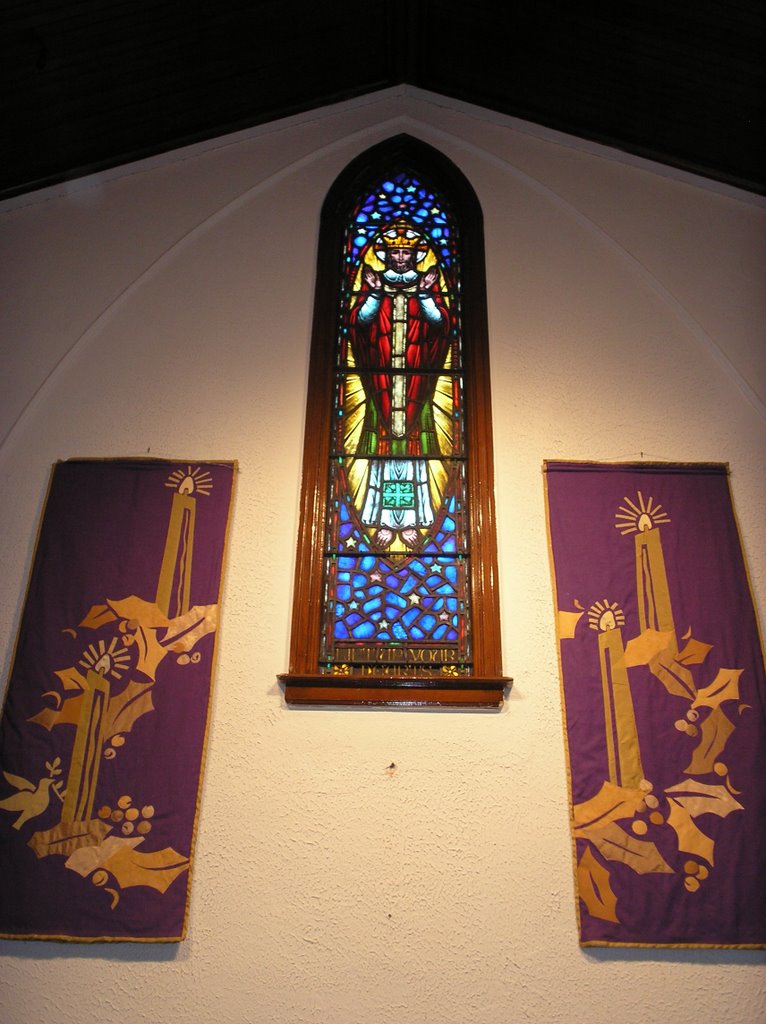
  • hang banners and wear vestments and stoles that reflect the colors (typically purple or blue with accents of gold) and symbols of Advent
  • enjoy the children’s book Waiting for Noel by Anne Dixon
  • observe times as a family. Will this mean those that live just under your roof or does family mean your church family? Include those that might live alone in your family’s activities such as sharing a meal, baking cookies or decorating a tree.
  • use an Advent wreath as a teaching symbol during worship. Invite members of the congregation to light the candles. These people can represent the entire faith family: traditional family units, the widowed, the single, and the divorced. A wreath can also be placed on the dinner table for lighting of the candles prior to family devotions and prayer.


We seem so eager for Christmas to arrive. If we hurry too quickly to the celebration of Christmas, we will be unprepared to welcome Christ. Blessings for your Advent.

Thursday, November 09, 2006

Countdown to Advent: The Jesse Tree


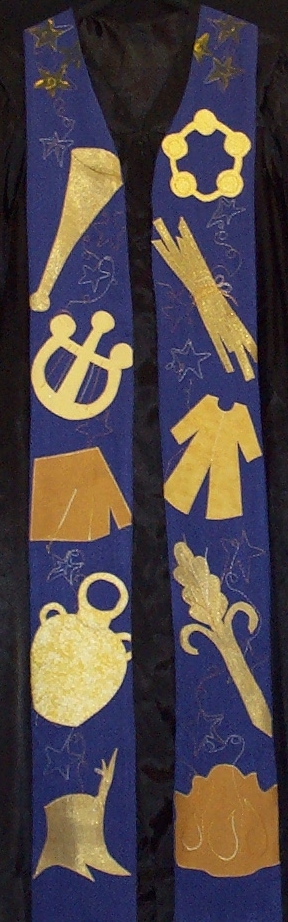
The story of Jesus brings hope, so do trees that absorb the old air and produce fresh air. So, the use of Jesse trees in our churches and homes tell not only stories of faith, but represent symbols of hope for the world. The tradition of the Jesse Tree dates back to medieval times. The name of the tree refers to the lineage of Jesse, mentioned in Isaiah 11:1: “A shoot shall come out from the stump of Jesse, and a branch shall grow out of his roots.” In creating a contemporary Jesse tree, one can use symbols from scriptural references and add others that have particular relevance for the local setting.

Learning is most significant if the message is delivered in several different means. If you have a Jesse tree you might also consider:


  • A prayer of dedication for the Jesse tree.

  • Incorporate hymns with the progressive decorating of the trees.

  • Wearing a teaching stole with Jesse tree symbols. Such as the one found at http://mysite.verizon.net/vzeoro2y/id36.html

  • Use the Jesse tree symbols on bulletin covers.

Jesse trees can bring new life to old, old stories in your congregation this Advent!

Wednesday, November 08, 2006

In the News

Vestments, in the past several weeks, have been making news headlines! The Red Mass, celebrated annually in the Catholic Church for judges, prosecutors, attorneys, law school professors and students, and government officials was celebrated at the beginning of the month. It takes its name from the red vestments worn by the celebrant and the people at the Mass to symbolize the Holy Spirit.

Secondly, it was a pleasure to read about the Rev. Gary Schulte as he was installed in New Hampshire to head the Congregational churches in that conference. Reportedly, hundreds celebrated by wearing white robes and colorful vestments.

Most recently, the news services have described the multicolored vestments that represent a new dawn, worn by Bishop Katherine Jefferts Schori as she formally took office Saturday as the first woman to lead the Episcopal Church.

Color has been used symbolically by all civilizations. I see it as a gift that unifies, focuses, and teaches. It also supports our emotions for celebrations and reflection. May we continue to embrace color through our faith and in our worship of the Almighty God!

Sunday, October 29, 2006

Bring on the Processional Banners!

Pamela Hardiman and Josephine Niemann who wrote Raise the Banners High! open their book with this statement: “It never fails. Every time processional banners are used in a liturgy, people seem a bit more alert, more attentive. …A good set of banners actually helps people celebrate liturgy in ways that other works of art do not. They help us participate with more of our senses.”

Have you thought about using banners in a processional instead of on a wall? I’ve had two occasions to help create such banners for worship. The first was for a Pentecost service. The banners were simple and bold strips of colored fabric suspended off a T-frame made from plastic tubing. These provided not only the colors of tongues of fire but a sense of the movement that must have been felt on that marvelous day the church first began. Secondly our worship leadership team wanted to try something different than the “typical” Nativity during the family Christmas Eve service. That year the children’s choir processed during the opening hymn with banners that had the figures for the Nativity graphically designed on them and placed them in the appropriate spots in the chancel as the story was told.

Recalling both of these first hand examples remind me of the energy that occurred during those worship services. I have to believe that the processional banners, unique to these services, were a worthy addition to helping us focus on praising God.

Tuesday, October 10, 2006

Inspired


Where do liturgical artists get their inspiration? Ultimately the inspiration comes from God but I find things like a walk through a museum, seeing a detail on a wonderful piece of architecture or the color of a wall in a coffee shop for example can spark that creative spirit. When I need to get out of the studio I often find my way to a bookstore which is yet another way to fuel my energy into a new project or revitalize one that has yet to jell. One of my recent finds in How to Read A Church, by Richard Taylor. If you aren’t familiar with this title you will enjoy the explanations of interpreting images in church art, understanding symbolism of individual animals, plants, colors, numbers, and letters, and considerations of how a church can reflect the Christian year. Happy reading!

Thursday, September 21, 2006

A Spider Made Me Think


A spider has decided to make my front storm door its home. While I was out of town it spun a beautiful web. At this point the children had watched the entire process and there was no way this spider was moving to a new location. Daily we see the web become more intricate or the spider catch food or the dew glisten on the strands, all while the spider gracefully moves about without disrupting a single strand.

Because we have so enjoyed this gift from the natural world it has made me wonder if we use the nature that God has given us to the best of our abilities in worship. I immediately think of cut flower arrangements which can be beautiful but sometimes they neglect to focus on or relate to the worship at hand. I heard of a congregation that used cut forsythia branches during Lent to represent the need to have simplicity during this season. As the days and weeks progressed the buds on the branches opened, timed so that at Easter this natural wonder matched the pageantry and glorious celebration of the Easter season. What a wonderful statement this must have made for this congregation!

We are approaching Advent and I wonder if my congregation will be using fresh greens instead of artificial. Their beauty and aroma will be reminders of the everlasting love God has for us. We’d love to hear the creative endeavors you have made to intertwine nature with our worship of the Almighty One.

Thursday, August 31, 2006

Multiple Intelligences in Worship

Are you a visual learner? Researchers estimate that 40-60% of people learn visually. You are correct if this sounds like something students and teachers are thinking about during back to school season. This is not, however, to be neglected by the faith community.

In 1983, Howard Gardner published his landmark book, Frames of Mind: The Theory of Multiple Intelligences, in which he detailed a different way of viewing intelligence that was quickly embraced by educators. Gardner, a Harvard researcher and professor, looked at intelligence as many-sided rather than as a general aptitude that could be measured by a paper and pencil test. He saw these intelligences as gifts within an individual that should be recognized and fostered.

How is your congregation addressing the needs of those that will be more attuned to worship through visual elements? Worship and Arts committees might brainstorm and find ideas beginning with banners fixed in one spot, power point staging, processional banners, flowers and other natural objects, clergy stoles and vestments, mobiles. This is not an exclusive list! We are encouraged and instructed again and again throughout the Bible to worship with all that we are…just don’t neglect the visual aspect.

If you have never taken a Multiple Intelligences quiz you might find
http://www2.bgfl.org/bgfl2/custom/resources_ftp/client_ftp/ks3/ict/multiple_int/index.htm interesting!

Monday, August 21, 2006

A Duct Tape Stole!?

I've just stumbled upon an old news story about a bride and groom that wore a wedding dress and tuxedo created out of duct tape. They were kind enough to complete the look by creating a stole out of the same supplies for the pastor. Reading this report has caused me to shake my head while at the same time chuckle out loud...what will someone think of next?

While maintaining reverence for worship, artists should think seriously about the materials that can be used for items such as stoles and worship banners. The days of felt glued upon felt are thankfully in the past! In my mind, any material that doesn't stretch is viable for these creations. When we think of worship banners the possibilities extend even further to include multitudes of types of papers. With both fabrics and papers, sheerness, transparency, texture, color, and pattern should be considered (and not forgotten) when seeking supplies for your next addition of something visual in worship. Happy creating!