Monday, August 06, 2007

Coffee Rituals


Do you have rituals or passions that help you move through your day? Like many of you, a cup of coffee is included in our routine at Carrot Top Studio. We tend to like a robust, full bodied brew. Something so full of flavor that we sit back and take a few cleansing deep breathes while enjoying it. Good for the mind, body and soul.


As one of the most heavily traded commodities in the world, coffee is a direct link between our community and farming communities in Latin America, Africa and Asia. We love purchasing our coffee from Equal Exchange (http://www.equalexchange.com/). By paying a fair price, working with democratic cooperatives, offering affordable credit and supporting sustainable agriculture, Equal Exchange helps farmers to build better lives for themselves and their families.


It’s finely hot and humid outside the studio. About 3:00 in the afternoon you can find us recharging for the rest of the day with a decaf Vietnamese Iced Coffee. We hope you’ll enjoy our version as follows.


Vietnamese Iced Coffee

2-3 teaspoons sweetened condensed milk
1 c. bold (such as French roast) coffee
Ice cubes, as needed

Put the condensed milk into a coffee cup. Stir to dissolve milk. Pour this mixture over ice in a beautiful glass and stir briskly with a long handled spoon, making an agreeable clatter with the ice cubes to chill the coffee.


Now go pour yourself a refreshing drink and if you haven’t entered the contest to win the Mystery Stole do it now! The clock is ticking! The winning entry will be drawn on August 10th and will be announced on the Carrot Top Studio blog! Go to
www.CarrotTopStudio.com and follow the directions under the “specials” page.

Monday, July 30, 2007

Artistic Expressions


Being in the midst of nature or seeing other artist’s work can be very inspiring for me. Who could argue with having both at the same venue? Therefore, last week we ducked out of the studio for a day to go visit Phipps Conservatory. The gardens are currently filled with larger-than-life glass sculptures and bowls by Dale Chihuly and his glassmaking team. These abstract natural forms with their exquisite, energetic colors added unbelievable beauty to the gardens.


Phipps describes this exhibit…“Right here in our lush and inspiring gardens, Chihuly has planted an exhibit of his wild and wonderful creations -- and the result is simply breathtaking. Known for his flamboyant colors, monumental sculptures and outdoor displays, Chihuly is also famous for his creative collaborations. Inspired by our Victorian glasshouse – one of the oldest in North America, this pioneer in the use of glass has joined with our horticulturalists and landscape designers to create a dazzling fusion of art and nature.” The show lives up to this description and much more.

I don’t think I’ve ever had a presentation of art touch me the way this show did. One of the thoughts that continually ran through my head was how Chihuly was able to use his glass art to supplement the already superb environment of the gardens. Even with the exquisite coloring of the glass the art always seemed to mingle happily with the environment. The art did not scream for attention. The plants were not shouting out because they were being ignored. The surrounding architecture was like the perfect packaging. This concept relates to our worship spaces. When wearing stoles, hanging worship banners, or even adding a flower arrangement to the chancel I believe it should only be done to enhance the worship that will occur in the space. These artistic expressions are best when they awaken us to God’s presence and not call attention to themselves. I appreciate how the Presbyterian Church phrases this concept in their Book of Order; “artistic expressions should evoke, edify, enhance, and expand worshipers’ consciousness of the reality and the grace of God.”

If you are in the Pittsburgh, PA area prior to this exhibit closing on November 11, 2007 you would be amiss not to treat yourself to the experience of a visit to the Chihuly exhibit at Phipps. In the meantime think about the space you worship in and encourage artists in their offerings. Lastly, see if you recognize some lines and shapes that echo the work of Chihuly at Phipps in new stoles designs at Carrot Top Studio!
You can learn more about Phipps at http://www.phipps.conservatory.org .

Tuesday, July 24, 2007

Support a Womens Small Business in Haiti


Haiti is the poorest country in the Western hemisphere. The average yearly income per family is about $250. Haiti is plagued with unclean water, no medical care, no public transportation, no public education and unemployment.

Our faith community, Westminster Presbyterian (http://www.westminster-church.org) in Pittsburgh, PA has a relationship with the LaCroix New Testament Mission in Haiti. Recently, friends visited Haiti and taught a small group of young women from the mission to hand-paint silk. The group is known as La Femme de LaCroix (The Women of the Cross). They have now learned how to paint, process, package, and keep records for the project. The goal is to provide training for the girls, who also get tuition credit for the silk they produce. The mission receives the entire profit from the sale of the scarves made from this silk. We have purchased some of the exciting hand dyed silk to encourage the women of LaCroix in their small business and to include it in the design of a series of stoles for purchase through the Carrot Top Studio website.

Fifty percent of the sale of each stole will be given to support the ministry to this Haitian community to help it continue to grow to become healthy and strong. You may purchase one at CarrotTopStudio.com (http://http://mysite.verizon.net/vzeoro2y/id72.html)
To learn more about the ministry to the LaCroix New Testament Mission go to http://http://www.thomaschurch.org/index_files/Page987.htm

Friday, July 20, 2007

Something's Underfoot


When we think of textiles in our worship spaces we probably first think of pastor’s stoles, vestments, paraments for the Communion Table or worship banners. However, you can’t neglect that we often garnish our sanctuaries underfoot also. For example, Native Americans had special animal skins on which they prayed. Another illustration is the Muslim tradition of using prayer carpets to create an isolated space to concentrate in prayer. Additionally medieval Christians in the colder climates of northern Europe began dressing the floors of cold stone churches with vegetable fiber mats as well as fabric rugs. Instead of monotonous, wall-to-wall carpeting, a well-chosen, strategically placed carpet can add color, texture, and liturgical symbols to the room as it honors and defines a place for devotion in a holy place.


I have been thinking about these types of textiles while savoring the novel The Blood of Flowers by Anita Amirrezvani. The story takes place in 17th-century Persia where a 14-year-old woman believes she will be married within the year. But when her beloved father dies, she and her mother find themselves alone and without a dowry. With nowhere else to go, they are forced to sell the brilliant turquoise rug the young woman has woven to pay for their journey to Isfahan, where they will work as servants for her uncle, a rich rug designer in the court of the legendary Shah Abbas the Great. She learns the carpet trade, blossoming as a clever designer and talented knotter. This captivating tale is interwoven with traditional Iranian folktales, as well as fascinating details of the art of the Persian rug.


Amirrezvani’s piece of literature, based on historical fact, is rich in detail of symbols and colors important to the religion of her characters. Time and time again in history we see examples of how the visual components of our faith are important. Another example is the photo in this blog that shows details of a rather unusual "Daghestan" prayer rug. It’s interesting to note that the cross shapes (as familiar to Christians) abound in this piece - even in the border. I am not an expert but one researcher of this rug wonders if it had been woven by Armenian Christians. It is not difficult to imagine the entire piece as a work of Christian faith.

The visual in the church today continues to be important. Based upon their dependence upon the internet, game systems, and the TV our youth are being raised to respond to the visual. We should take a lesson from history and from what the young today are thriving upon and not ignore the space underfoot...even in worship!

Sunday, July 15, 2007

Why Wear A Stole?


After worship this morning, my research and development team (that’s my family!) was brainstorming ideas for a new line of stoles and vestments. The ideas ranged from the silly to the sublime. Pastor’s stoles with miniature sparkling LED lights, a stole with a flashing “applause now” sign, stoles remembering saints such as Mother Theresa, and stoles respecting the earth's resources because they were made out of recycled fibers were among the suggestions.

All this fun brainstorming may find you asking yourself why pastors even wear stoles. We’ve learned several stories. Stoles first might have originated as a practicality. It’s believed they were something upon which to wipe one’s hands after receiving the offerings of the people at a time in the early church when offerings of produce, other food stuffs and various animal products as well as financial offerings were given.

Secondly, in the 10th century, priests were commanded to wear stoles as a badge of their calling, especially when traveling. They may even have had little bells on the ends so people would know when they were approaching.

Lastly, we think symbolically of a stole as a yoke. This reminds us of Matthew 11:28-30, “Come to Me, all who are weary and heavy-laden, and I will give you rest. Take My yoke upon you and learn from Me, for I am gentle and humble in heart, and you will find rest for your souls. My yoke is easy and My burden in light”.

What do you think? Does any of this history of pastor's stoles or brainstorming of new ideas grab you? If you’d like to share any ideas send us an email or better yet share the idea when you enter to win the free "Mystery Stole" at Carrot Top Studio. Go to
www.CarrotTopStudio.com and follow the directions on the Specials link.

Tuesday, July 10, 2007

Pueblo Style Cross


The cross is the most familiar religious symbol of Christianity. During the first two centuries of Christianity, the cross was rare in Christian iconography as it depicts a purposely painful and gruesome method of public execution. The Ichthys, or fish symbol, was used by early Christians. The Chi-Rho monogram, which was adopted by Constantine I in the fourth century as his banner was another Early Christian symbol of wide use.


In Christendom the cross reminds Christians of God's act of love and atonement in Christ's sacrifice at Calvary - "the Lamb of God who takes away the sin of the world." The cross also reminds Christians of Jesus' victory over sin and death, since it is believed that through His death and resurrection He conquered death itself.


The cross is often depicted in different shapes and sizes and in many different styles. The Pueblo style cross as seen on the pictured stole is based on one that was found among the Pueblo people, groups of Native Americans living in the Southwest. The crosses usually have a plain design and are made of silver. When Spaniards arrived in the Southwest and encountered the native peoples in the early sixtennth century, they erected tall crosses at each village. The Franciscan missionaries taught the Native Americans to revere the crosses. The priests traded or gave ornamental crosses to the people, believing that if the Native Americans wore the crosses, they were accepting the new religon. In most cases the Pueblo peoples had accepted the crosses only as ornaments and not as symbols of the religon associated with them. Over time, many Pueblo people were converted to Christianity, and they personalized the cross design with their own cultural interpretation.
*Like the stole in this photo? It can be found at http://mysite.verizon.net/vzeoro2y/id70.html

Sunday, July 08, 2007

Creativity


Looking for a words to help you prepare for creativity to be appreciated or unearthed? We like the following and invite you to try it also...


Praise the Lord, I tell myself;

O Lord my God, how great you are!

You are robed with honor and with majesty;

you are dressed in a robe of light.

You stretch out the starry curtain of the heavens;

you lay out the rafters of your home in the rain clouds.

You placed the world on its foundation

so it would never be moved.

Mountains rose and valleys sank

to the levels you decreed.

Then you set a firm boundry for the seas,

so they would never again cover the earth.

(Psalm 104:1-3,5,8-9 NLT)


Thirsty for more? This Ordinary Time would be a time to work your way through the book The Creative Life, by Alice Bass. Find it on Amazon, here-- http://www.amazon.com/Creative-Life-Unearthing-Christian-Imagination/dp/0830811877/ref=sr_1_1/002-4613655-6949669?ie=UTF8&s=books&qid=1183941583&sr=8-1


Discover the creativity that God has for you!
*photo is a detail of a stole that can be viewed in it's entirety at (http://mysite.verizon.net/vzeoro2y/id45.html )

Tuesday, July 03, 2007

Recalling Patriotic Hymns


Tomorrow, in the United States, we will celebrate our country’s independence. I absolutely love celebrations and am particularly fond of the Fourth of July. Fireworks and relaxing time spent with good friends are highlights of this day for me. I usually conjure up visual images such as banners and stoles for special days within the year, but for the Fourth of July I hear the music of patriotic hymns dancing in my mind.


A favorite, “O Beautiful for Spacious Skies” by Katharine Lee Bates was written when her soul was stirred by the expansive earth below and the spacious skies above while hiking Pikes Peak in Colorado. She wrote, “It was there as I was looking out over the amber skies, that the opening lines of this text formed themselves in my mind.” Reportedly she immediately set to writing the hymn while in Colorado Springs.


I adore hiking the mountains and have had the pleasure of traveling to the top of Pikes Peak so I can relate to Ms. Bates reaction to her experience. There are many other places in this grand world that can provide those “mountain top moments”. I’m proud to be an American but after reading the history of this hymn I also think the wonderfully descriptive words it contains can be supplied for many places on this wonderful planet. Thanks be to the Creator.

Tuesday, June 26, 2007

Living in God's Time


Jesus teaches us through parables about the kingdom of God. For example, he uses the story of the mustard seed which grows into a large shrub. Likewise during Ordinary Time many churches use the color green for their stoles, vestments, and banners as an instructional reminder. Green is the color of growth and we can easily be stirred by nature to examine the multitude of variety there is within the hue and then carry this into the color within our sanctuaries. We are constantly inspired by Jesus's clever ways of teaching and using color and symbols is yet another way we can reach especially those that learn visually.

Additionally, as we grow to understand the kingdom of God I think of the questioning strategies that the Children and Worship (http://www.childrenandworship.org/ ) program uses. They teach the children to “wonder” to facilitate growth. For example:

  • I wonder what the kingdom of God looks like in today’s scripture?
  • I wonder why Jesus told this story?
  • I wonder how I would have to change to live as Jesus tells us?
  • I wonder what I can do this week to participate in the kingdom of God?

In the midst of this Oridnary Time enjoy the numerous greens, take time to wonder, and be encouraged to grow and lead others to do the same.

*The pictured Mustard Seed stole will be available on eBay (http://search.ebay.com/_W0QQsassZcarrottopstudioQQhtZ-1QQfrppZ50QQfsopZ1QQfsooZ1QQrdZ0?) beginning 6/28.

If you like these thoughts you may enjoy Living in God’s Time, by Margaret McMillan Persky.

Wednesday, June 06, 2007

Children and Worship

The gospel is for all persons, regardless of age. The church includes persons of all ages. Worship is a corporate action in which children can be participants with adults. It is through such shared experiences that a child comes to know some things about God. Here are a few of our favorite tips regarding children and worship:


For parents:
It is hard to sit still for long. God knows this and so do we.
Growing up isn’t always easy, but it is well worth the effort.

For the congregation:
Greet the children around you.
Pass the children the offering plate, rather than over their head.
When children give visible worship leadership, respond to them as worship leaders—not as performers!
Always laugh with children, not at them.
Invite a family with children to sit with you.
Be understanding when parents need to take younger children out and then return to worship.
Remember the promise we make at the baptism of the children among us!

For the leadership:
In Children in the Worshiping Community by David Ng and Virginia Thomas it is suggested to read aloud Romans, chapter 12 with a group of children. Are these children not members of the body of Christ, with differing gifts? Can they not show faith and serve and teach and show mercy? Children can love, show honor, be aglow with the Spirit, rejoice in hope, be patient in tribulation and constant in prayer. The church would not be whole without children.

Children like adults respond to visual stimulation. Think about the vestments, paraments, banners, and bulletin covers your congregation uses. Are the symbols and colors relevant to support the worship? Do they change often enough so the congregation will continue to take notice?


Celebrate, embrace and learn from the children in your midst! Jesus welcomed them, so can we.

Wednesday, May 30, 2007

Ordinary Time Ingenuity

Ordinary Time might take a little ingenuity. I like to ponder what Acts 2:42 says; “They devoted themselves to the apostles’ teaching and fellowship and the breaking of bread and prayers”. In worship we change our stoles and banners to the traditional shades of green to symbolize growth. Our actions can also promote a visual influence and reminder of the Mystery of Christ. I stumbled across a list of ideas from the United States Catholic Bishops that includes simple tangible suggestions. They include:


Give a flower~Eat lunch with someone new~Listen with your heart~Visit a sick friend~Clean a neighbor's walk~Offer a hug~Give an unexpected gift~Make a new friend~Say "hello"~Call a lonely person~Open a door~Help carry a load~Plant a tree~Pass a kindness on~Buy someone's meal~Cheer up a friend~Thank a teacher~Give blood~Read to a child~Do one kind act every day~Leave a thank you note~Offer your seat~Tip generously~Be tolerant~Let another go first~Tutor a student~Give a compliment~Pay the next driver's toll~Lend a hand~Offer a ride~Respect others~Encourage a child~Walk a dog~Do a favor~Forgive mistakes~Drive courteously~Share a smile.

Enjoy living in the midst of Ordinary Time!

Thursday, May 10, 2007

Pentecost


Pentecost is upon us and we anticipate being filled with joy and hope when we celebrate the birthday of the Church. Take pleasure in the following Ann Weems poem for inspiration, devotion or use in a group.

The church is Pentecost.
The Holy Spirit is poured out upon us
And sends us out together
aflame
with new life,
Inheritors of the wealth of God:
Life abundant.
We are liberated from the prisons of pettiness,
jealousy, and greed,
Liberated to be the church.


From Reaching For Rainbows

Wednesday, April 18, 2007

Book Review


Do you enjoy church history? Have you been thinking about the relationship between the liturgical arts and culture? You shouldn’t miss reading: All in Sync: How Music and Art Are Revitalizing American Religion by Robert Wuthnow. After interviewing 400 people, this Princeton sociologist reports that religious communities are being revitalized by increased artistic engagement. In fact, his studies show that "those with greater exposure to artistic activities are more likely than those with less exposure to be seriously committed to spiritual growth." Wuthnow is an astute observer of religious trends and at Carrot Top Studio we are very excited about the prospect of churches finding the balance between music and art and using these elements to strengthen personal spiritual journeys.

PS-Don’t neglect the wonderful creative answer to banners by Nancy Chinn on the cover of this book!

Thursday, March 22, 2007

Rejoice!


In the midst of this season of ashes and dust, if you are in ministry, you probably need to think ahead to plan an Easter celebration. At Carrot Top Studio we also work a season ahead, therefore the phrase “Rejoice at the coming of your King!” is currently dancing in mind. This reference to Zechariah 9:9 fills me joy!

How will your congregation illustrate the joy of the Easter season? It may possibly be through the traditional colors of white and gold. Many will display lilies (see http://mysite.verizon.net/vzeoro2y/id66.html for an explanation of lilies) and spring flowers. Crosses will be draped in white and stoles and worship banners will display butterflies and the Lamb of God. Others will greet Easter morn while worshiping outside. The bona fide rising sun is an awesome visual display that could be part of any liturgical ritual.

What else can we do that is visual in worship for Easter? Involving children is keeping with Christ’s teachings. The young and young at heart would love to show their Easter joy with visual art that includes motion. Make ribbon dancers (directions follow) and let them REJOICE through movement accompanied by the uplifting music of Easter.

Ribbon Dancer

Supplies: 12” long wood dowel at least ¼” in diameter,
1 eye hook,
1 barrel swivel (found where fishing supplies are sold),
3-6’ silk ribbon, approx. 1” wide.

Attach eye hook in end of dowel. Attach barrel swivel to eye hook. Tie ribbon onto barrel swivel. Enjoy the movement of the ribbon by holding the dowel and turning your wrist.

Wednesday, March 07, 2007

Saint Patrick


Liturgical art is woven into my business creating unique stoles and worship banners. Therefore when I recently read, “the saints are to God like stained glass is to sunlight” I immediately loved the connection of a liturgical art form to faith. I think this person was seeing light changing as it passed through the colored glass. The many colors combine to form diverse hues to reveal hidden perfections of the original light beam. This calls to mind the virtues of the saints that help us to better appreciate God's comprehensive goodness.

Saint Patrick is of course one example from history that we can model our lives after. He was a missionary and the foundations of Christianity in Ireland are largely attributed to him. His life included a time in captivity, but he showed faith when he heard God’s call. The seeds that were planted when Patrick learned the Celtic language while in captivity allowed the perfections of God’s holiness to shine through him. By contemplating and honoring saint’s goodness, we come better to know and revere the overawing holiness of God.
Many of us are preparing to celebrate Saint Patrick’s Day. Some will do this with a green beer in hand or a green carnation on the lapel. But you might model your action after St. Patrick who of course focused elsewhere. He said, “May the strength of God pilot us, may the wisdom of God instruct us, may the hand of God protect us, may the word of God direct us. Be always ours this day and for evermore.”


Wednesday, February 14, 2007

Color Is the Symbol


We woke this morning to a glorious scene of sparkling snow. The whiteness blanketed everything it could. The color set a feeling in me that was much different than when I rise on a grey, rainy day or a brilliant, sun filled day. It never ceases to amaze me how color can affect a mood, trigger a feeling, or set the tone of an environment. Thinking of this is very fitting with the beginning of Lent right around the corner. I love the season of Lent because it invites us to a more intense reflection and a recoiling from everyday life. How can this feeling and mood be approached visually in worship? The liturgical color for Lent is purple, a solemn color, and a color for royalty and repentance. Consider letting color, without symbols, be the visual, solemn code and vehicle for centering on Christ. The color is the symbol.

Thursday, January 25, 2007

Sanctuary

Our studio has just completed a Noah’s ark stole design. This has caused me to ponder “the ark” and what it meant to Noah, his family and the animals. The ark was a sanctuary.

What is a sanctuary? Webster’s Dictionary defines it as a place of safety or refuge. In medieval law, a sanctuary was a place of religious right of asylum for felons on the run from the law. In churches the word sancutary defines an architectural space but varies in tradition from the elevated place where the altar stands in the chancel, and where the ordanined servant of the congregation leads the worship to a more general reference to the place where worship services are held.

Noah was faithful to God. May we also be faithful to God in our contemporary sanctuaries by speaking, singing, dancing, and creating the visual connections that are responses and celebrations of the Word.

Thursday, January 04, 2007

Don’t Put the Celebration Away

Advent allows us to anticipate Christ’s birth. Christmas Day has arrived and we are now in the midst of the Twelve Days of Christmas. Soon this part of the liturgical calendar will climax when most Christians will celebrate Epiphany on January 6th. Epiphany looks ahead to the mission of the church to the world in light of the Nativity.

The five pointed star is symbolic of the Epiphany, or the manifested nature of God. Matthew 2:1-12 records that the wise men came from the east and asked, “Where is he who has been born king of the Jews? For we have seen his star in the east, and have come to worship him.” The five pointed star is the star “out of Jacob” (Num. 24:17) and Jesus Christ, “the bright morning star” (Rev. 22:16) who manifested himself to the Gentiles. The five pointed star usually accompanies scenes of the nativity.

While celebrating Epiphany you may cut out paper stars and place them in the windows of your home. Alternatively you might gather with your congregation for scripture, song, and fellowship as your Christmas trees provide light in a bonfire. Regardless of how you celebrate, Epiphany is about letting God’s light and love shine through us and recognizing that light in others. Shine on!


*artwork: Nativity-3 by Kim Jae Im, Korea

Thursday, December 14, 2006

Banners as Artistic Expressions


Do you seek to bring a sense of life and color to your worship space to enhance and expand worshipers’ perception of the reality and grace of God? Worship banners are a form of artistic expression that can do just that. Banners have a long established tradition is churches. Well-designed banners are an effective means toward the enhancement of worship both because of their visual appeal and because they can be continually changed in color and symbolism to represent the progression of the calendar of the Church year.

Whether the banners are to be in a small or grand scale there are several components to think about so you can obtain your goal. Who will make the banners? Banners can be created by teams of people gifted with artistic and textile construction skills. Artists can be commissioned to create banners. Children can also create banners under well planned adult guidance. Secondly, decide if the banners will hang for a short or long period of time. This will help dictate the type of materials used because anything from butcher block paper to magnificent brocade fabric has potential. Thirdly, examine and measure the space the banners will hang in. Proportion to the architecture is key to helping the banners function direct attention to God. It would not be appropriate for the banners to call attention to them or be present for their beauty as an end to themselves.

May your church banners echo the psalmist who declared, “O Lord, our Lord, how majestic is they name in all the earth!” (Psalm 8:9)

*angels are a detail from new banners created by Carrot Top Studio for a parish in Michigan.

Monday, November 27, 2006

Don't Forget Advent!


  • This Sunday we will begin a new church year. Advent allows us to once again turn our attention to the preparation for the coming of the Lord. Advent is a Latin word meaning “the coming.” Officially established by church leaders in the sixth century, Advent was originally meant to be a time when Christians reflected on the meaning of Christmas. Today, fourteen hundred years after the first Advent season, many churches and families use the symbols of Advent—wreaths, candles, and calendars—to bring the spiritual meaning of Christmas alive in a way that teaches minds, touches hearts, and reflects the original purpose of the tradition. How can we see Christ more clearly, judge the world more wisely, and live in relationship with God more faithfully? Consider the following for the church and/or the home:

  • sing the hymns of Advent and save the Christmas favorites for Christmas
  • make a paper chain to countdown through Epiphany-using different colors for each season (purple, white, green)
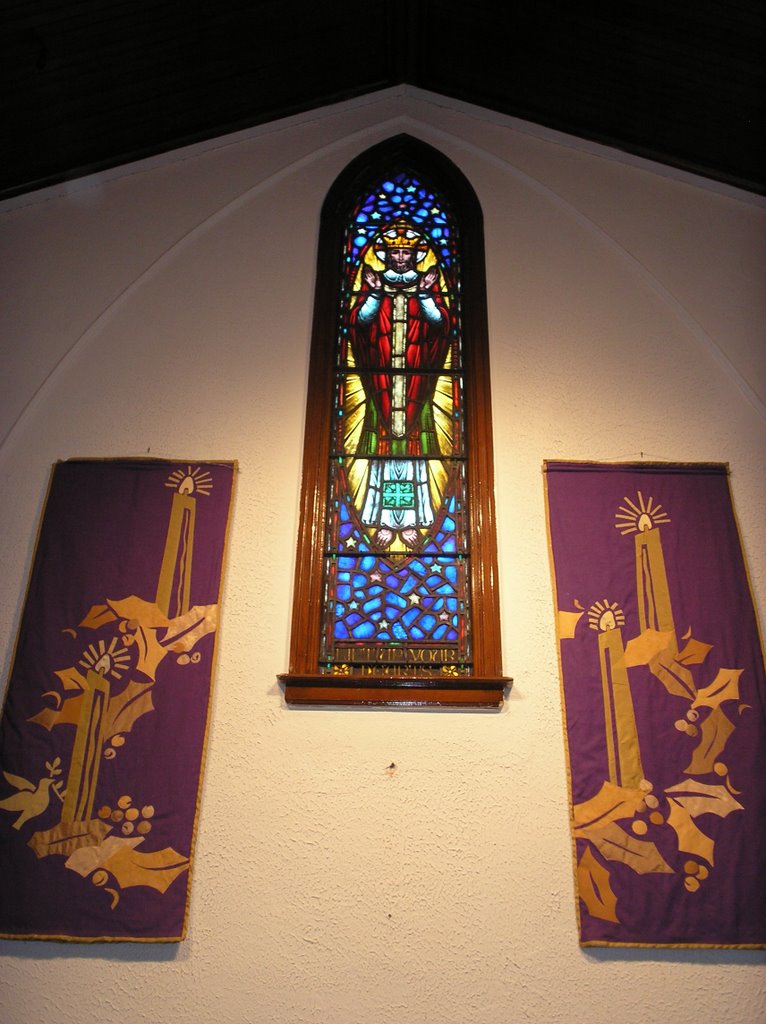
  • hang banners and wear vestments and stoles that reflect the colors (typically purple or blue with accents of gold) and symbols of Advent
  • enjoy the children’s book Waiting for Noel by Anne Dixon
  • observe times as a family. Will this mean those that live just under your roof or does family mean your church family? Include those that might live alone in your family’s activities such as sharing a meal, baking cookies or decorating a tree.
  • use an Advent wreath as a teaching symbol during worship. Invite members of the congregation to light the candles. These people can represent the entire faith family: traditional family units, the widowed, the single, and the divorced. A wreath can also be placed on the dinner table for lighting of the candles prior to family devotions and prayer.


We seem so eager for Christmas to arrive. If we hurry too quickly to the celebration of Christmas, we will be unprepared to welcome Christ. Blessings for your Advent.